


Connecting rods and parts
More informationAt Global Parts, we offer a wide selection of genuine used car parts, including connecting rods and parts for many popular car brands such as BMW, Mini, Mercedes, Audi, Volkswagen, and others. The connecting rods and parts we offer undergo quality control to ensure you receive a top-quality product.
Find it faster
Match to your vehicle
Make
Category
Subcategory
Timing Components & Kits
Condition
In Stock
Price
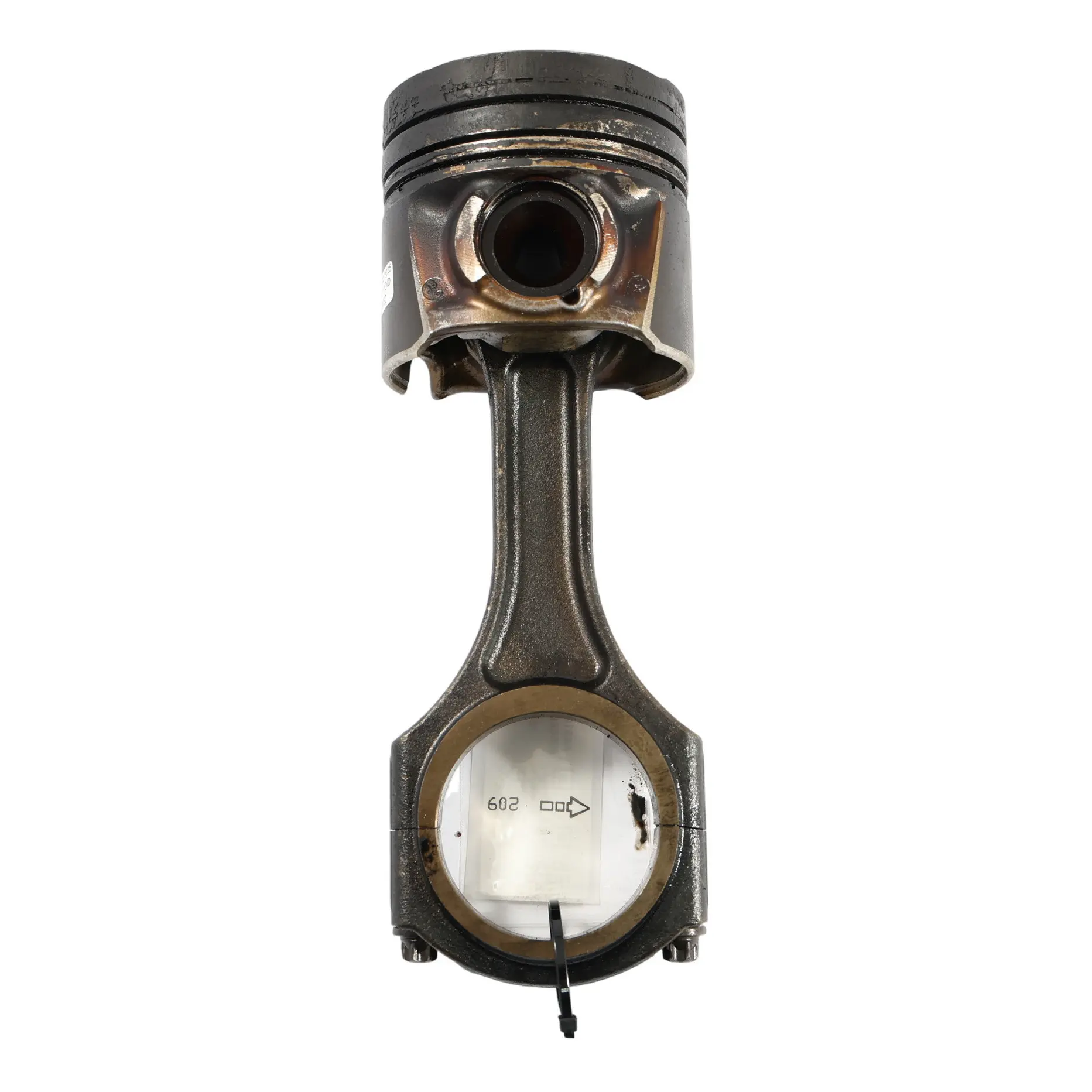
Part no. A6510301117
Mercedes W204 W212 Engine Connecting Rod Piston Conrod Diesel OM651 A6510301117
€56.95
Free delivery: Oct 5 – 8
If paid before 14:00
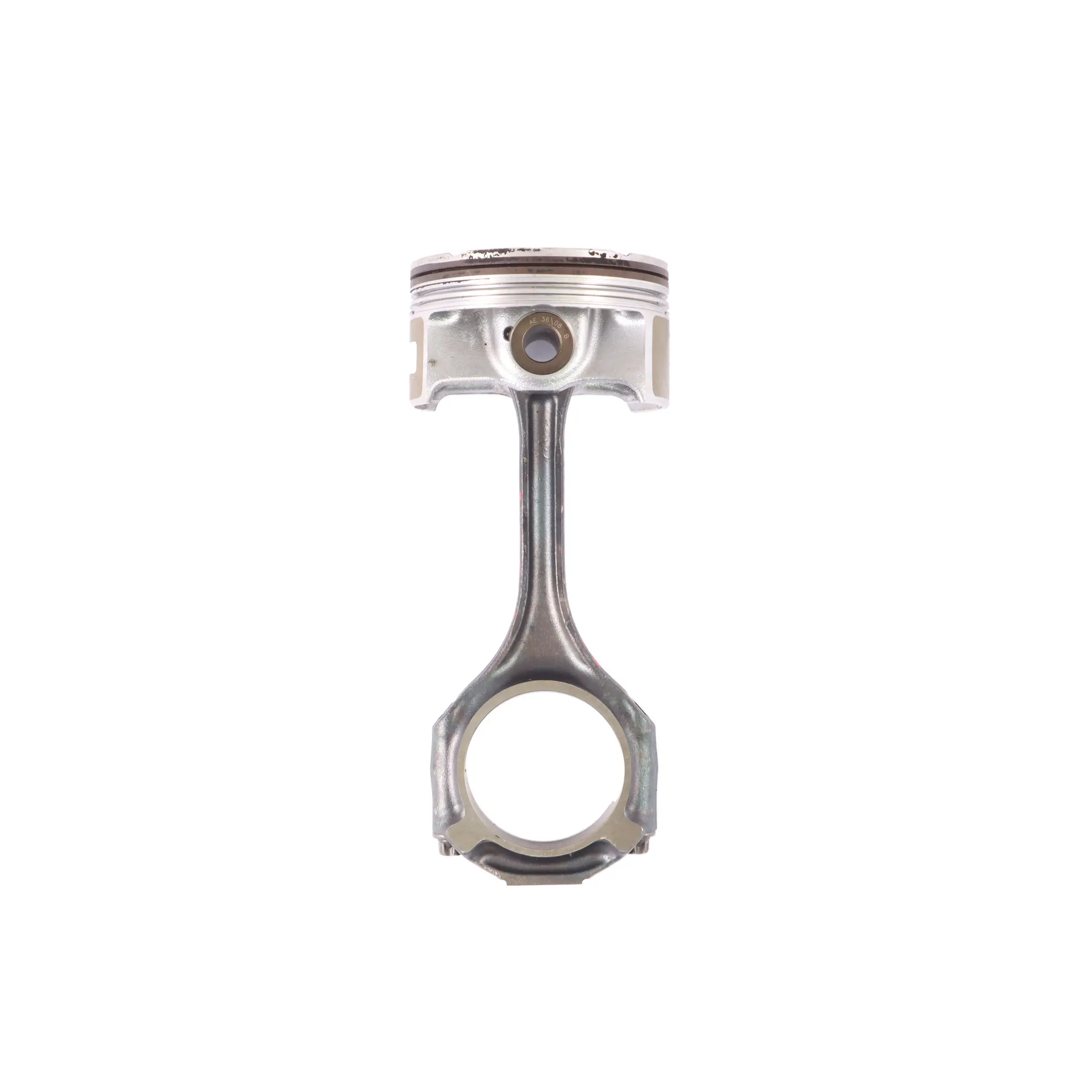
Part no. A2730300820
Connecting Rod Piston Mercedes W204 Petrol Engine M272 A2730300820 A2720301018
€47.95
Free delivery: Oct 5 – 8
If paid before 14:00
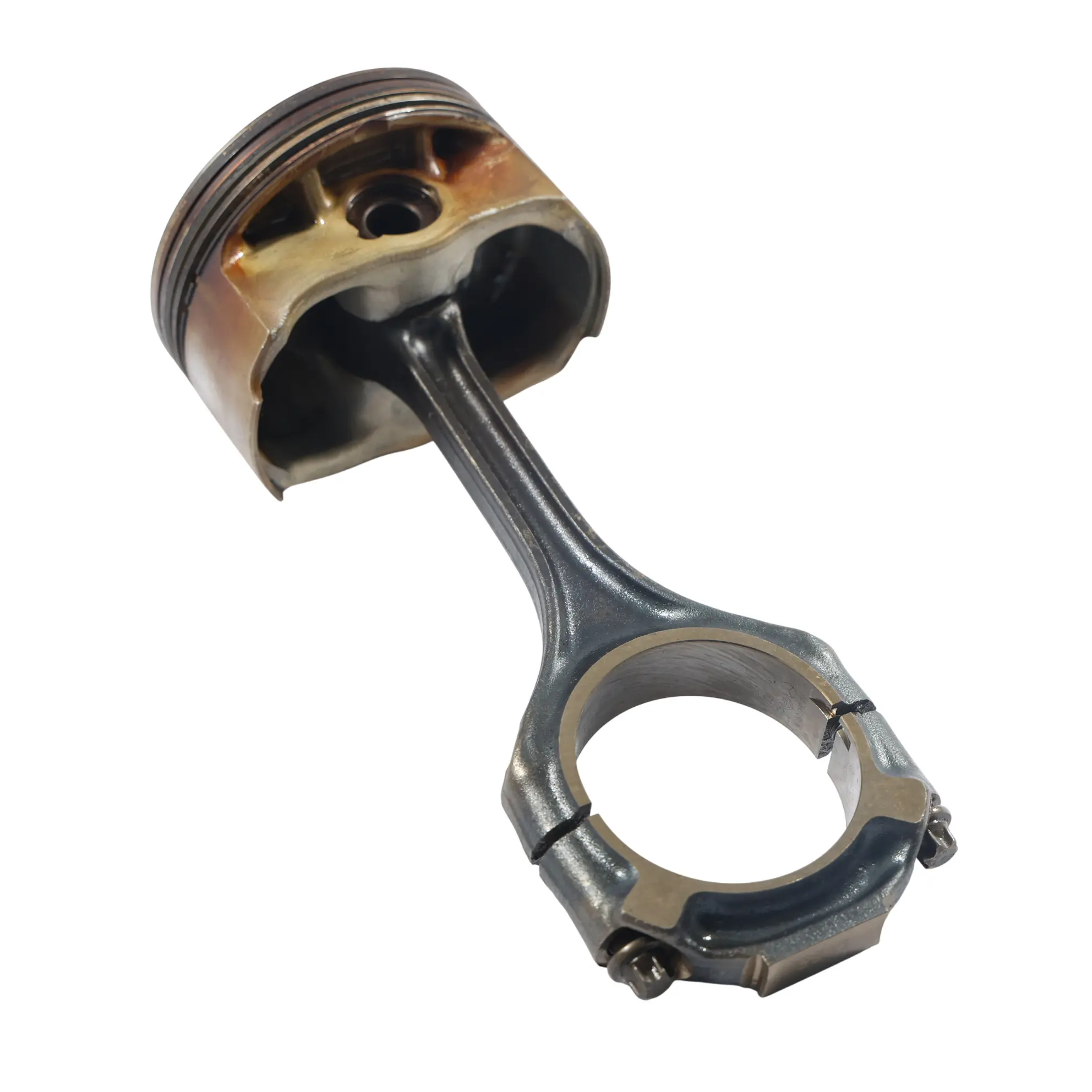
Part no. A2730302117
Mercedes W212 W221 Piston Connecting Rod Conrod Petrol Engine M273 A2730302117
€189.95
Free delivery: Oct 5 – 8
If paid before 14:00
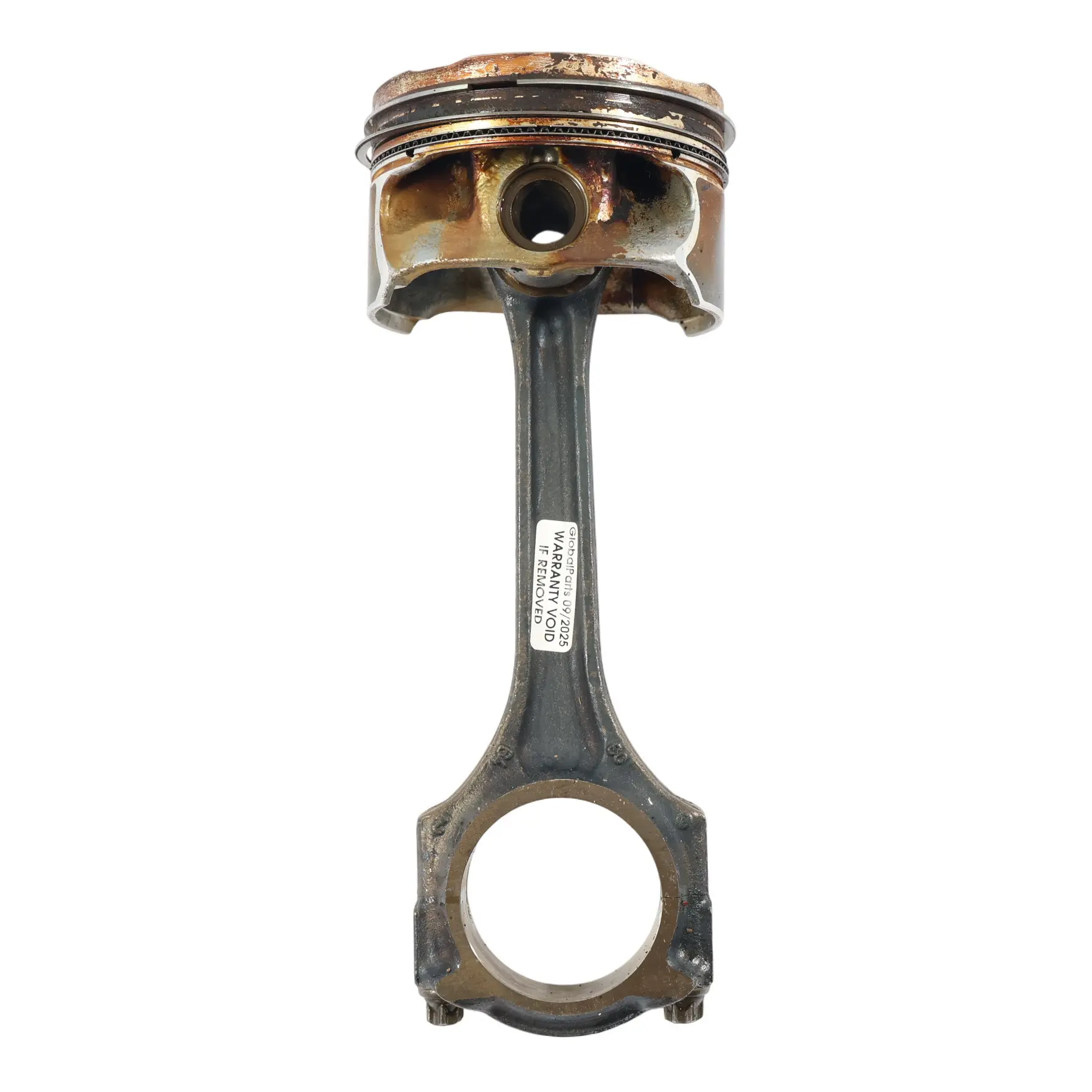
Part no. A2700302717
Mercedes W176 W246 C117 Engine Connecting Rod Piston Conrod Petrol M270.910
€75.95
Free delivery: Oct 5 – 8
If paid before 14:00
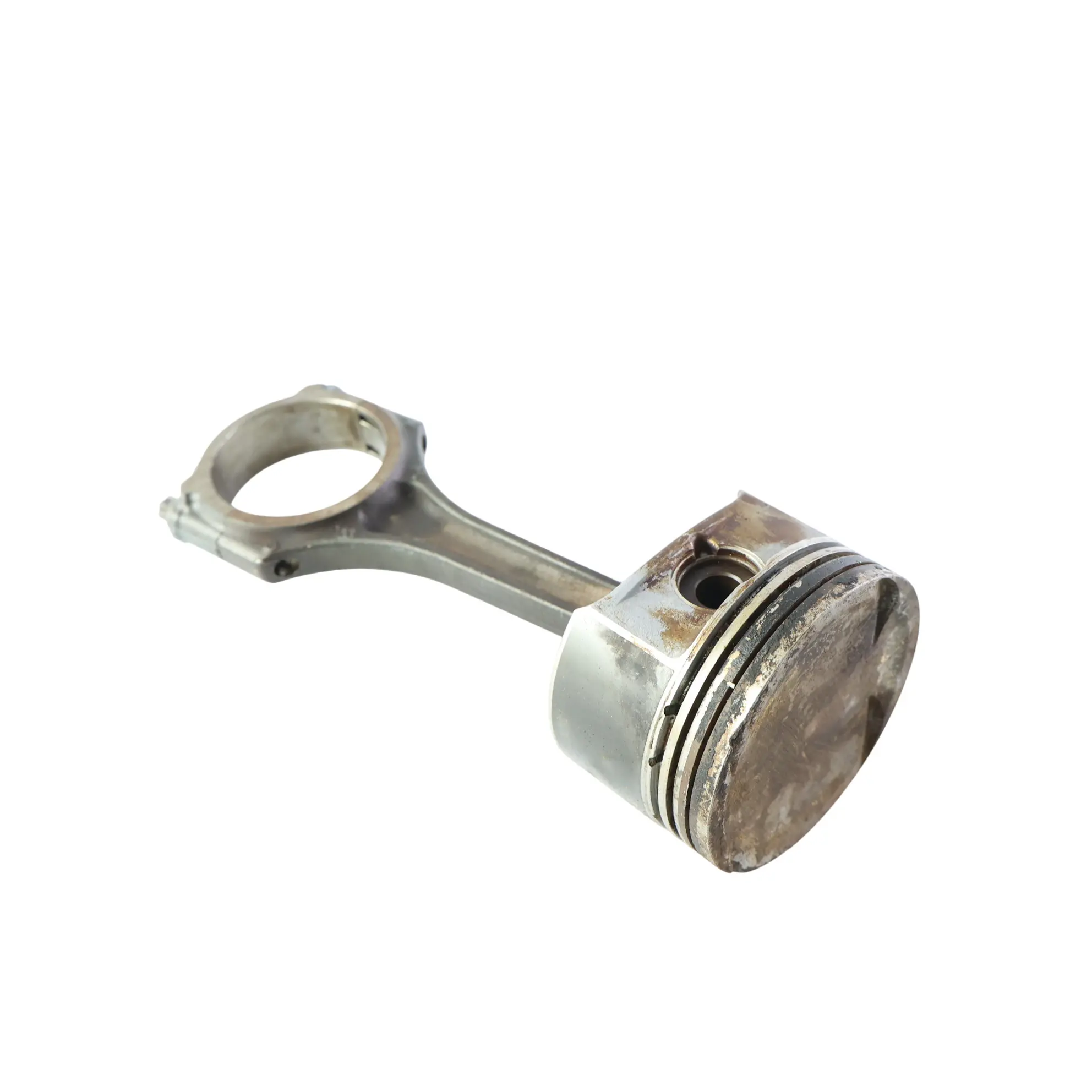
Part no. 82L86
Mercedes W203 C180 Petrol M271 Engine Connecting Rod Piston Conrod 82L86
€32.95
Free delivery: Oct 5 – 8
If paid before 14:00
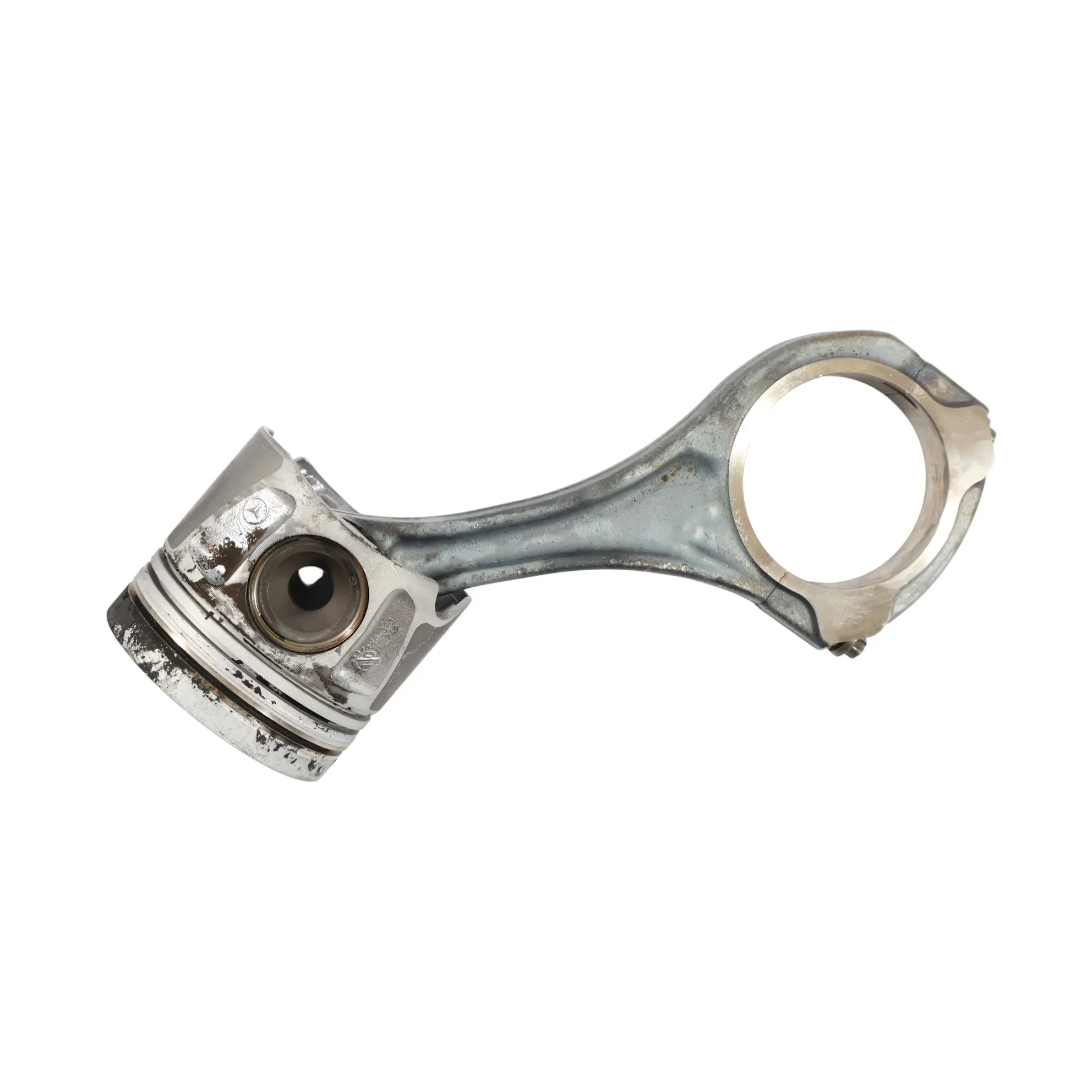
Part no. A6420300518
Mercedes C218 Piston Left N/S 642853 Diesel 350 CDI BlueEfficiency A6420300518
€28.95
Free delivery: Oct 5 – 8
If paid before 14:00
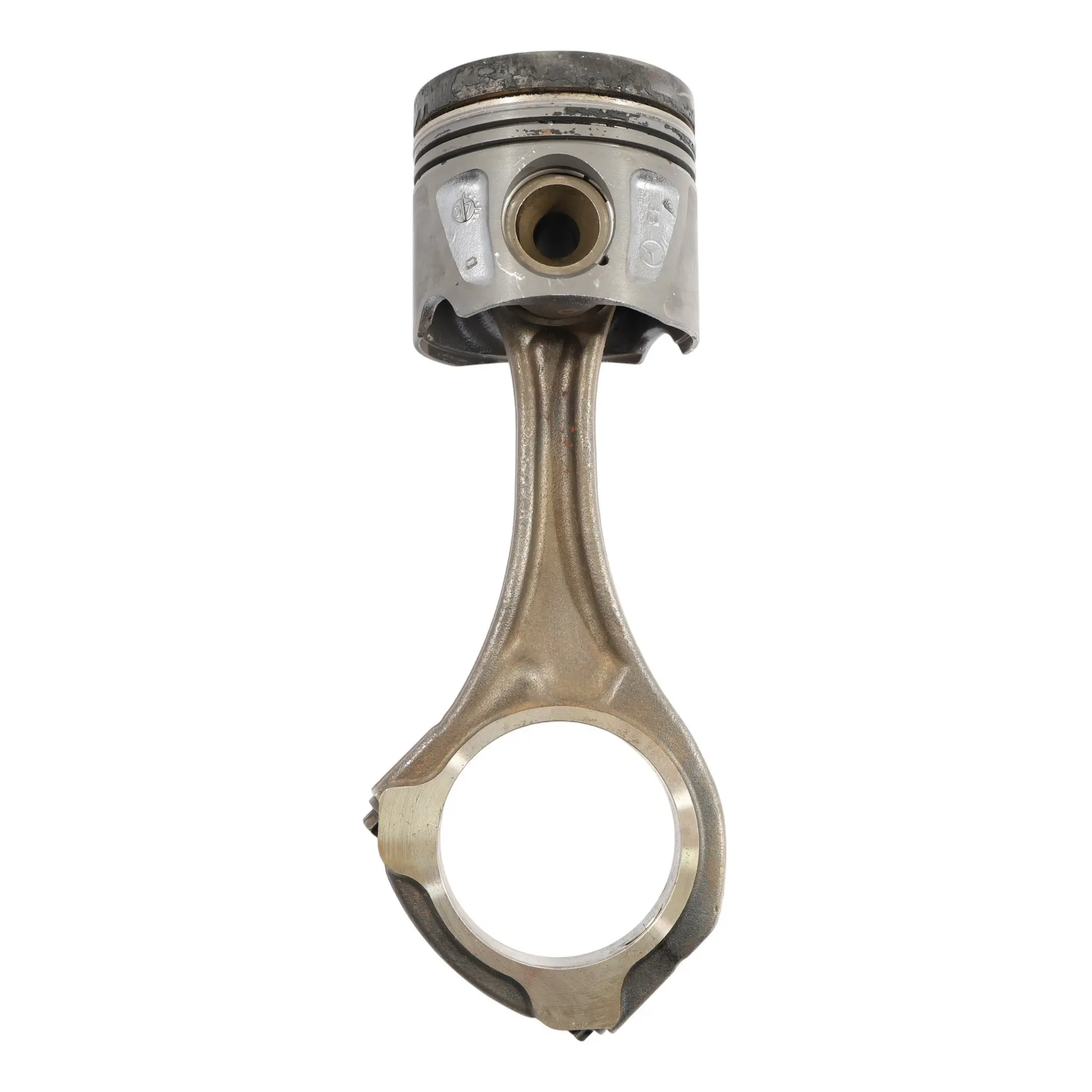
Part no. A6420305817
Engine Connecting Rod Mercedes W204 W207 Piston Conrod Diesel OM642 A6420305817
€51.95
Free delivery: Oct 5 – 8
If paid before 14:00

Part no. A2720301618
Mercedes W204 W212 Connecting Rod Piston Petrol Engine M272 A2720301618
€94.95
Free delivery: Oct 5 – 8
If paid before 14:00
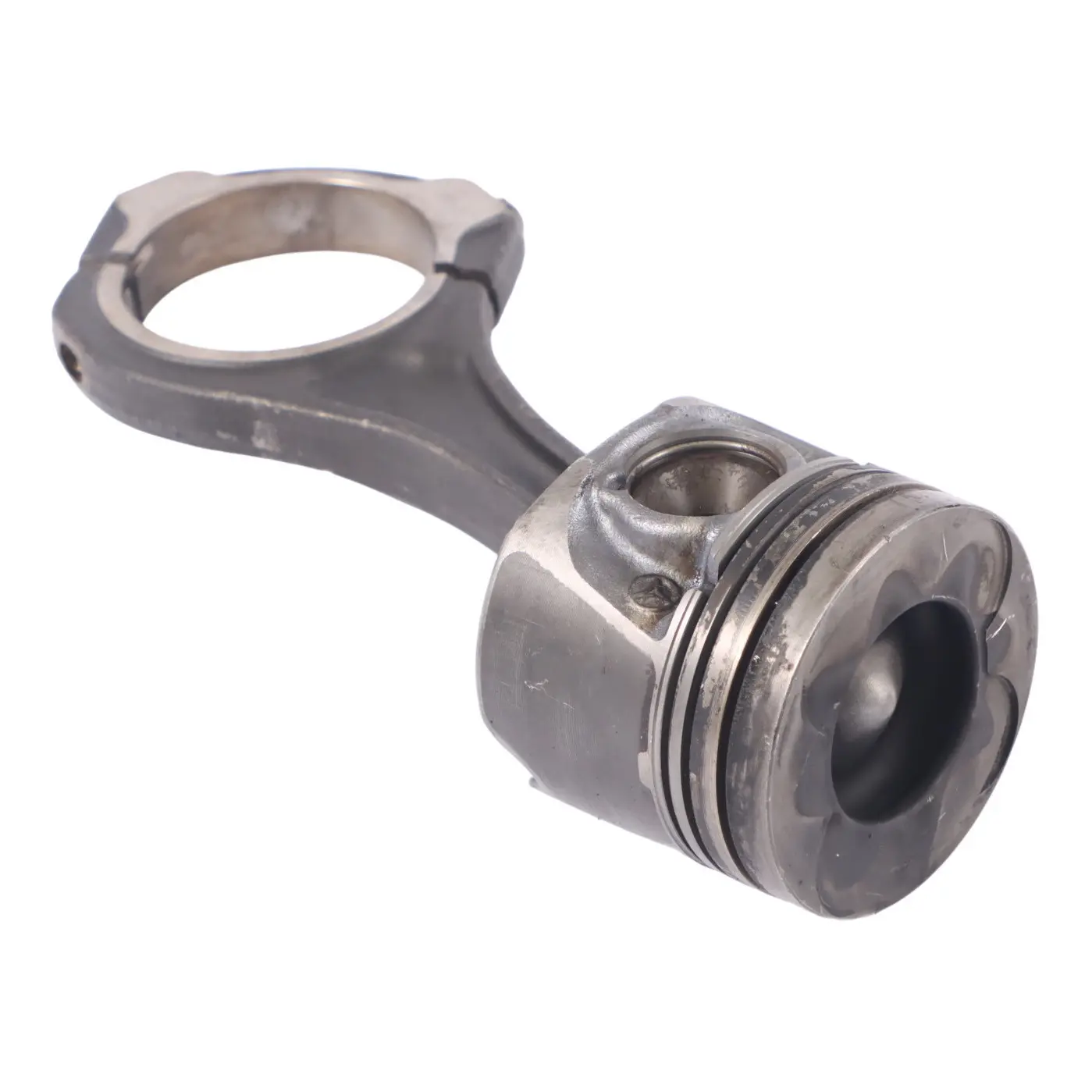
Part no. A6420305220
Mercedes W204 W221 Engine Connecting Rod Piston Conrod Diesel OM642 A6420305220
Product currently unavailable
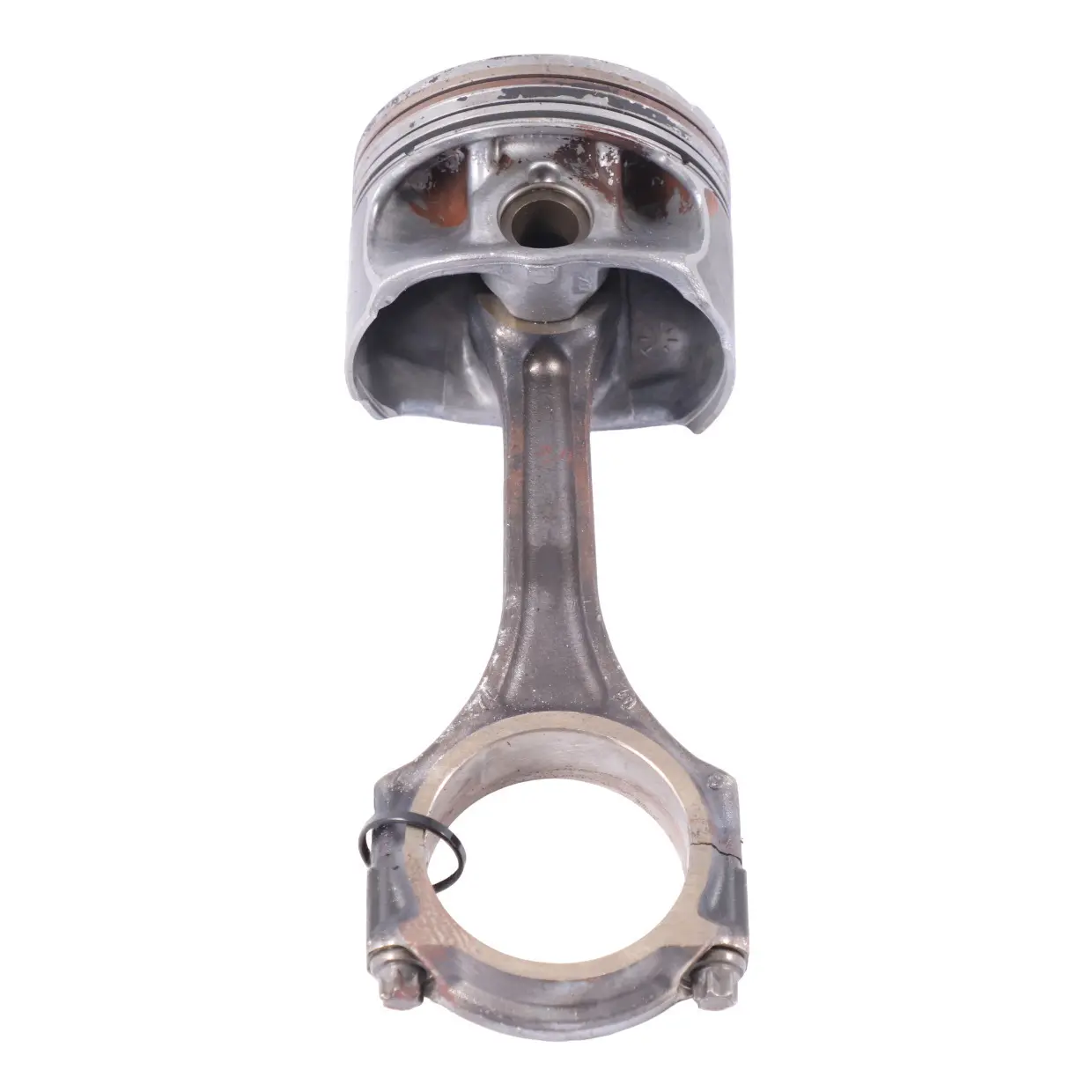
Part no. A2700301917
Connecting Rod Piston Mercedes W176 C118 Petrol Engine M270 A2700301917
Product currently unavailable
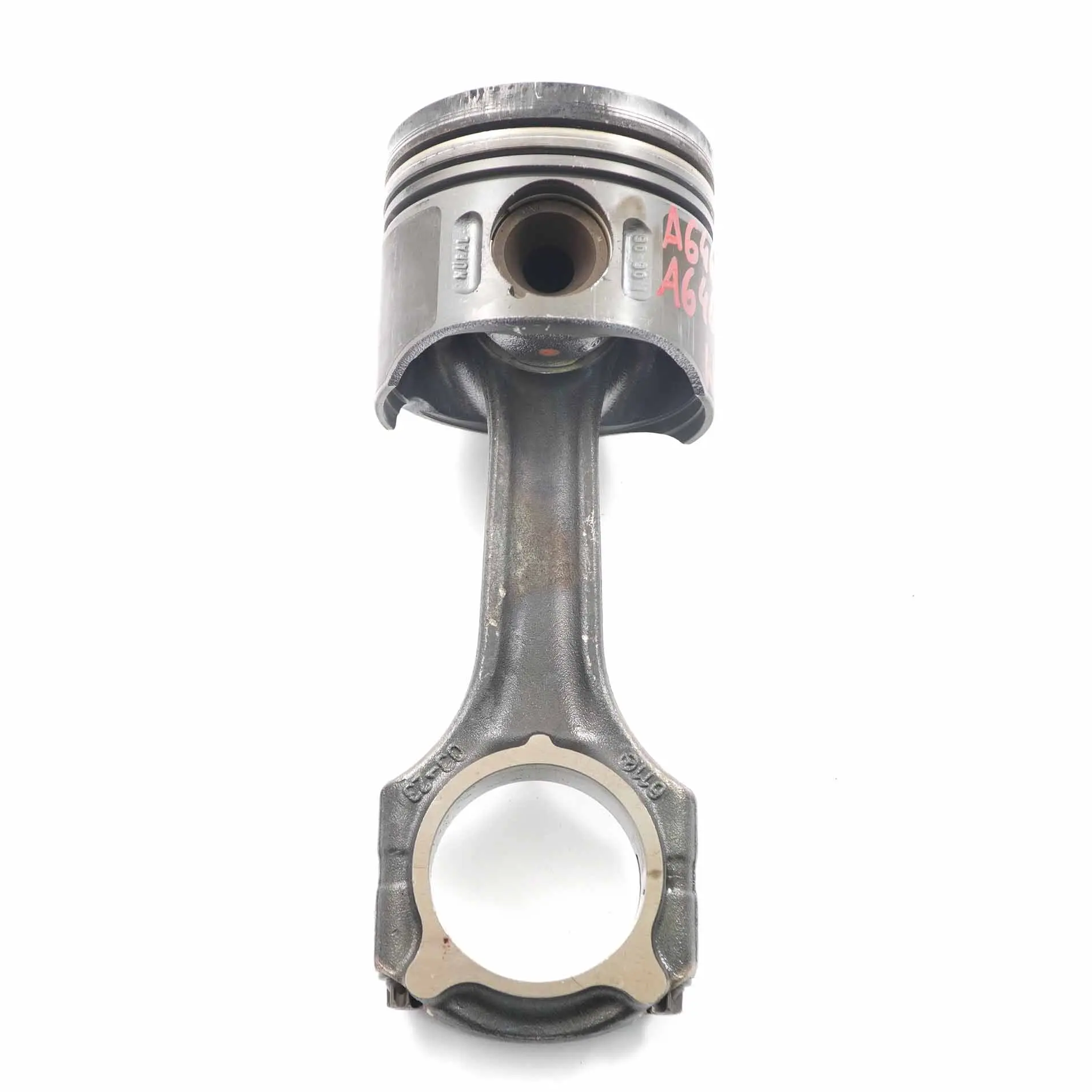
Part no. A6460300117
Mercedes W639 Diesel OM646 Engine Connecting Rod Piston Conrod A6460300117
Product currently unavailable
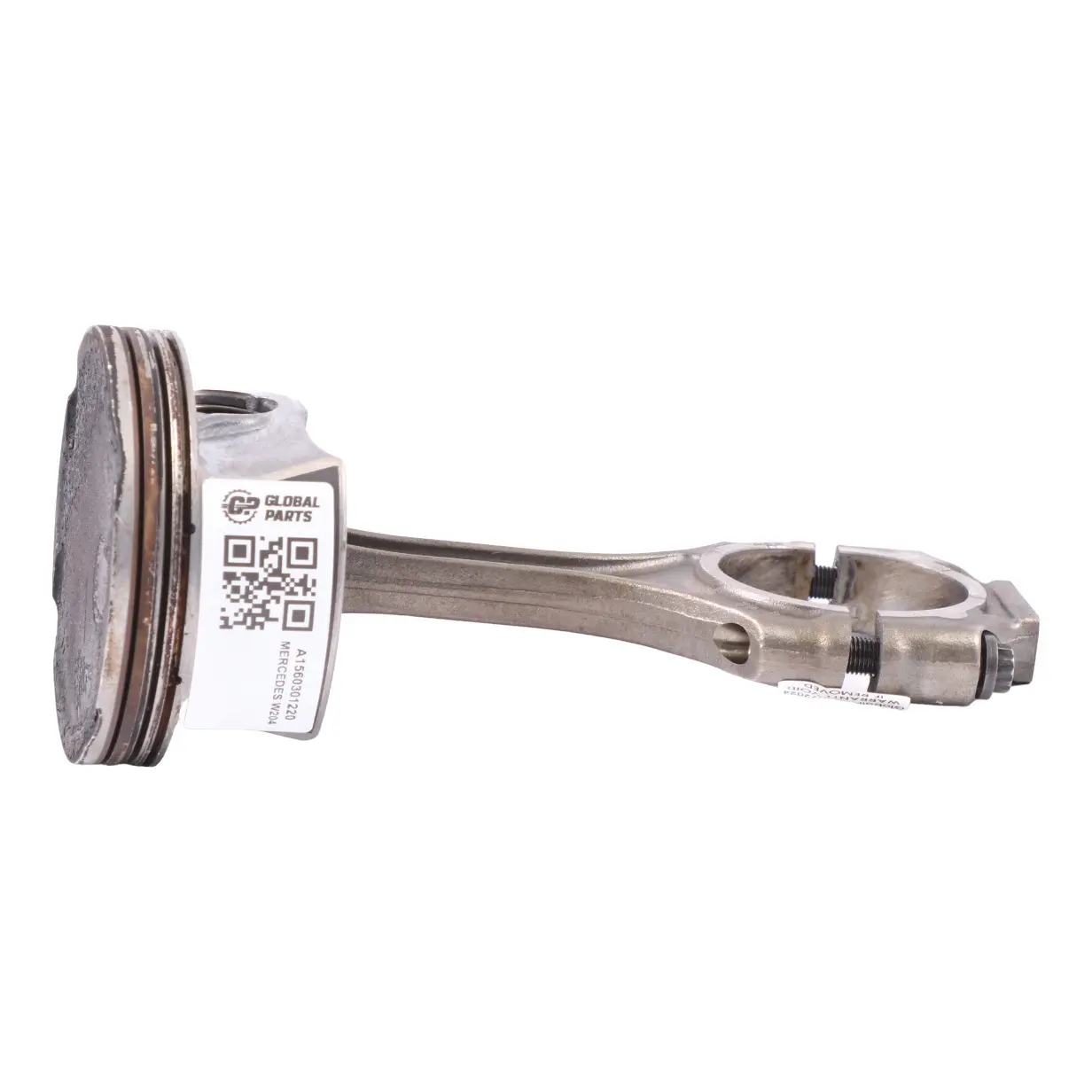
Part no. A1560301220
Conrod Mercedes W204 W207 W212 Petrol M156 AMG Engine Connecting Rod Piston
Product currently unavailable
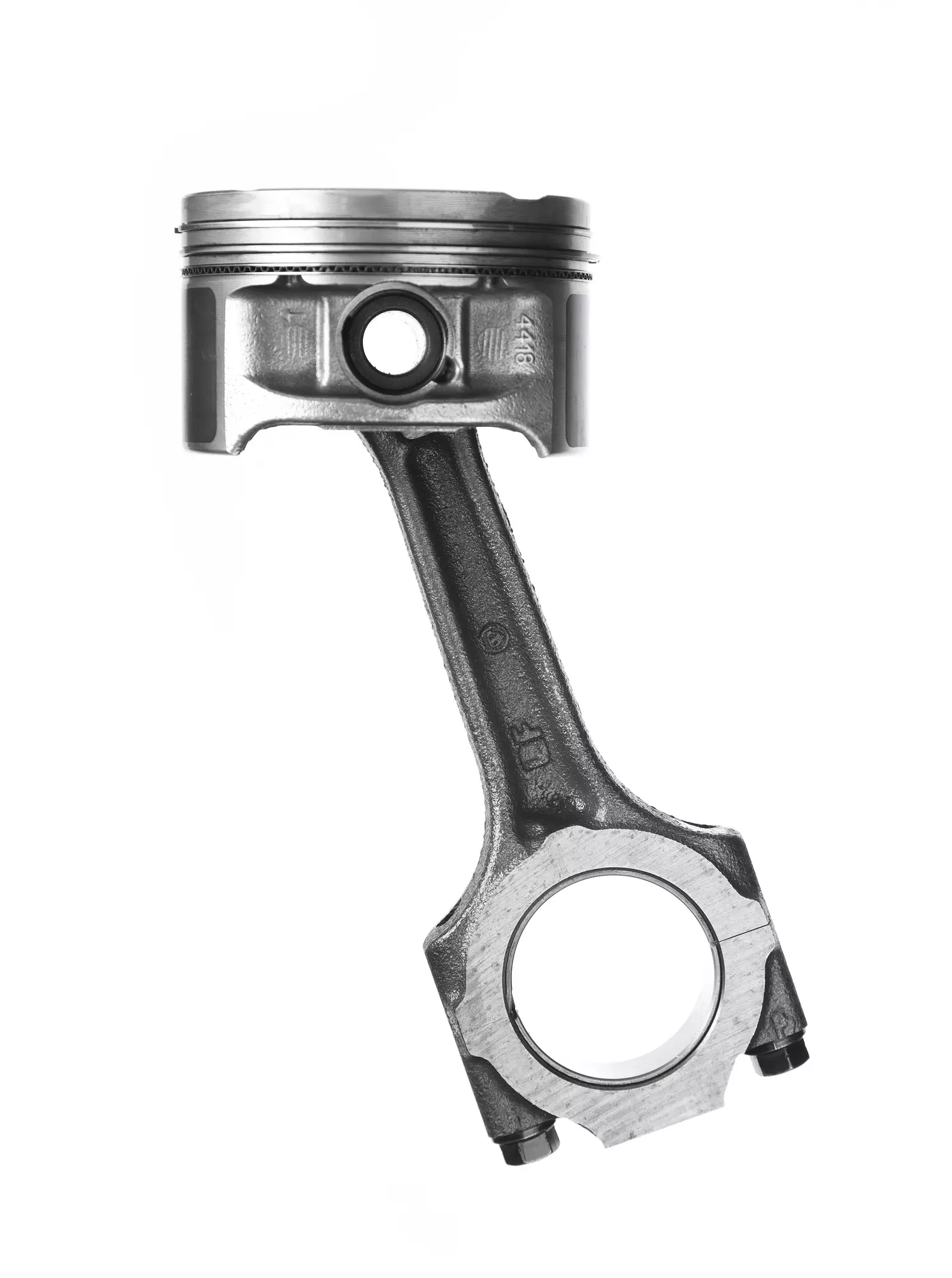
Crank system components – key to efficient engine operation
Characteristics and role of connecting rods in the effective transmission of piston force
Connecting rods are one of the most critical engine components, responsible for transferring the motion of the pistons to the crankshaft. Their durability and precision have a direct impact on the efficiency, performance, and lifespan of the power unit. In the Global Parts automotive store, you will find a wide selection of used car parts, including connecting rods and components for popular brands such as BMW, Audi, Mercedes, Volkswagen, Mini, and others.
What functions do connecting rods and their parts perform?
Connecting rods and their parts play a key role in engine operation. Together, they are responsible for:
- Energy transfer – The connecting rod links the piston to the crankshaft, converting the linear motion of the piston into the rotational motion of the crankshaft.
- Engine stability – They ensure the even and smooth movement of all cylinders.
- Durability in extreme conditions – Connecting rods must withstand the immense forces and temperatures generated during the combustion of the fuel-air mixture. Key components of connecting rods include:
- Connecting rod body – The central element connecting the piston to the crankshaft.
- Connecting rod bearings – They ensure smooth movement of the connecting rod and minimize friction.
- Mounting bolts and nuts – They are responsible for a secure connection between the connecting rod and the crankshaft. Automotive connecting rods are made of forged or cast steel alloy, often with a friction-reducing coating. The typical length for 4-cylinder engines is 135–150 mm, and the weight of a single connecting rod is approximately 1.2–1.5 kg. In diesel engines, such as in the BMW E46 320d, connecting rods must withstand forces from 40 to 60 kN at maximum combustion pressure, and the permissible bending tolerance is 0.03 mm.
Construction and purpose of connecting rods and parts
Connecting rods and parts are components of the crank-piston system mounted inside the engine, between the piston and the crankshaft journal. The connecting rod serves to transfer the loads generated during combustion and convert the reciprocating motion of the piston into the rotational motion of the crankshaft. A typical set includes the connecting rod itself, the big end, bearings, bolts, and surfaces interacting with the piston and crankshaft. The operating clearance, lubrication, and stability of the unit depend on the compatibility of these elements.
Comparison of connecting rod variants and interacting elements
| Variant | Construction | Application | What to check before installation |
|---|---|---|---|
| Forged connecting rod | High material density, high fatigue resistance | Units with higher loads and higher torque | OEM number, straightness, condition of holes and threads |
| Cast connecting rod | Serial construction, matched to a specific engine | Standard petrol and diesel versions | Compatibility with piston, journal diameter, big end type |
| Connecting rod bearings and bolts | Mounting and sliding elements interacting with the connecting rod | Maintaining proper clearance and stable connection | Interchangeable numbers, surface condition, set completeness |
Why is it worth taking care of connecting rods and their parts?
Faulty or damaged connecting rods and parts can lead to serious engine failures, such as:
- Connecting rod breakage – Can cause damage to other key components, such as pistons or the crankshaft.
- Excessive friction – Resulting from bearing wear or improper lubrication.
- Vibration and noise – Caused by play or damage in connecting rod joints. At Global Parts, we offer used connecting rods and parts that have undergone detailed quality tests, ensuring their reliability and durability.
The role of connecting rod bearings and cooperation with other subassemblies
Connecting rod bearings are a sliding layer mounted between the big end of the connecting rod and the crankshaft journal. The bearing serves to maintain a proper oil film and limit friction during operation under load. Connecting rods work directly with crankshafts, pistons and rings, and the lubrication system, so when selecting them, you must compare the OEM part number, journal diameter, fuel type, and placement in the specific unit. When choosing an element like a steering wheel, buttons and connector type are key, whereas in this category, mechanical parameters and compatibility with the specific engine remain the most important.
Selection of connecting rods by OEM, engine version, and equipment
When completing a repair, it is worth starting with the OEM number and comparing interchangeable numbers, as the same car model may come with different variants of connecting rods. When completing a repair for a specific model, e.g., BMW E90, it is good to verify the engine code, fuel type, part condition, and compatibility with the piston and bearing diameter. In practice, it is also helpful to check elements from the Engine bearings, main and connecting rod and Gaskets and mounting parts categories, as their fitment determines the correct assembly and tightness of the unit. A useful addition when purchasing is the guide Safe purchase of used car parts online – a step-by-step guide, which suggests how to compare markings and part versions.
Assessment of technical condition and symptoms of connecting rod wear
Wear of a connecting rod or its accessories is most often manifested by knocking from the lower part of the engine, a decrease in engine smoothness, and signs of overheating on the bearings. A connecting rod is an element that must maintain straightness, correct hole dimensions, and proper fit after tightening the big end, so inspection should not be limited to visual checks. If you are looking for a component like a rear bumper, you usually compare mounts and body version, whereas here, you must also assess bearing surfaces, bolts, and signs of operation with insufficient lubrication. Neutral verification by VIN and OEM number helps reduce the risk of incorrect fitment.
Comparison of automotive connecting rod types
Connecting rods can be divided into classic steel, forged, and cast.
- Forged steel: strength up to 800 MPa, minimal deformation, recommended for sports petrol engines.
- Cast steel: strength 500–600 MPa, economical, used in diesel and standard petrol engines. Comparing them in terms of durability and cost, forged ones are more expensive but offer higher resistance to material fatigue, which is crucial in high-torque units.
How to choose the right connecting rods and parts?
When choosing connecting rods and parts, you should pay attention to several key aspects:
- Fitment to the vehicle model – Every engine has its specific design requirements. At Global Parts, you will find connecting rods and components matched to BMW, Audi, Mercedes, Volkswagen, Mini, and others.
- Technical condition – Check that the connecting rods have no signs of wear, cracks, or deformation.
- Set completeness – Choose sets containing bearings, mounting bolts, and other necessary parts to avoid additional costs.
Sample table of connecting rods and basic parameters
| Vehicle model | Connecting rod type | Length | Material | Average weight |
|---|---|---|---|---|
| BMW E46 320d | Forged steel | 144 mm | Steel | 1.3 kg |
| Audi A4 2.0 TDI | Cast steel | 142 mm | Steel | 1.25 kg |
| Mercedes C200 | Forged steel | 150 mm | Steel | 1.4 kg |
Why is it worth choosing used connecting rods and parts?
Used car parts, such as connecting rods and their elements, are an economical solution that allows for savings while maintaining high quality. By choosing used connecting rods and parts, you gain:
- Lower costs – Used components are significantly cheaper than new ones but offer equally high quality.
- Ecology – Recycling car parts supports environmental protection and reduces waste.
- Wide offer – In our store, you will find connecting rods and parts for the most popular car brands.
How to take care of connecting rods and their parts?
To ensure connecting rods and their parts work reliably for years, it is worth following a few rules:
- Regularly change engine oil and filters to ensure proper lubrication.
- Check the condition of connecting rod bearings to prevent excessive friction.
- Avoid overloading the engine, which can accelerate the wear of connecting rods and their elements. If replacement is necessary, at Global Parts you will find suitable used auto parts that will restore your engine to full efficiency.
Connecting rod inspection procedure
The connecting rod assessment procedure includes:
- Measurement of length and straightness (tolerance ±0.02 mm).
- Checking bearing diameter and clearance (0.02–0.05 mm for petrol engines, 0.03–0.06 mm for diesels).
- Inspection for cracks and micro-cracks using ultrasonic tests.
- Verification of compatibility with the piston and crankshaft of the given model.
FAQ
| Question | Answer |
|---|---|
| What is the construction and purpose of connecting rods and parts? | Connecting rods and parts are elements of the crank-piston system that link the piston to the crankshaft and operate inside the engine block. A typical set includes the connecting rod shaft, big end, mounting holes, bearings, and mounting bolts. Their task is to transfer combustion forces and maintain proper moving cooperation between the piston and the crankshaft. |
| What are connecting rods and parts used for? | Connecting rods and parts are used to convert the reciprocating motion of the piston into the rotational motion of the crankshaft. They are also responsible for transferring very high dynamic loads and maintaining the axial alignment of the entire system. Without their proper fitment, the engine will not maintain proper lubrication, operating clearances, or smooth operation. |
| What is the construction and function of connecting rod bearings? | Connecting rod bearings are sliding elements mounted between the big end of the connecting rod and the crankshaft journal. Their working surface interacts with the oil film, thereby reducing friction and wear during crankshaft rotation. In addition to reducing resistance, the bearings also influence the maintenance of proper clearance and the protection of interacting surfaces. |
| How to choose connecting rods and parts for a specific engine? | It is best to compare the OEM part number, interchangeable numbers, engine code, fuel type, and the condition of the offered element. It is also worth checking the hole diameters, the type of connecting rod big end, and compatibility with the piston and crankshaft. For used parts, the completeness of the set, including the presence of bolts and bearings, is also important. |
| What symptoms indicate wear of connecting rods or their accessories? | Typical symptoms include metallic knocking from the lower part of the engine, excessive vibration, a decrease in smoothness of operation, and signs of overheating or seizing after disassembly. Wear can also be indicated by play on the bearings and uneven wear marks on the bearing surfaces. Each of these signals should be evaluated together with an inspection of the lubrication system. |
| What to pay attention to when installing connecting rods and parts? | Before installation, you should check the straightness of the connecting rod, the condition of the threads, the interacting surfaces, and dimensional compatibility with the crankshaft and piston. It is also important to use appropriate mounting elements and maintain correct tightening torques in accordance with technical documentation. After assembly, you must ensure that the system has the correct operating clearance and provided lubrication. |
Summary: connecting rods and parts at the Global Parts automotive store
Connecting rods and their parts are the foundation of the efficiency and durability of every engine. The Global Parts offer includes used components for many power units, including for brands such as Mercedes, BMW, Volkswagen, and others. When choosing, it is worth comparing the OEM number, interchangeable numbers, fuel type, part condition, and compatibility with the engine's interacting elements. We invite you to contact us – we are here to help you! For more information and interesting facts, we also invite you to our automotive blog.